
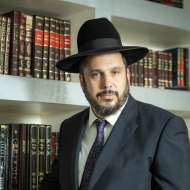
 Rabbi Yosef Sprung
The issue of whether to tell the truth or withhold it frequently arises in medical practice, especially when doctors must give difficult news to patients or their families. Typically, the choice involves either sharing the whole truth or softening the facts, presenting them in a more vague manner. These decisions are generally driven by concern for the patient’s well-being, not by other motives. This remains one of the most significant and complex ethical dilemmas faced by teams caring for patients with serious illnesses.
Beyond the focus on patients’ rights – which are not explicitly defined in Halacha, as it emphasizes the caregiver’s obligations – there is the fundamental principle of truth-telling. This principle is crucial for caregivers, not only as a moral duty but also to encourage cooperation from the patient and others. Most importantly, it is vital for securing the patient’s informed consent, based on a clear understanding of their condition before proceeding with treatments.
In Halacha, we also find significant discussion concerning patients who are incurable or in the terminal stages of illness. Sharing the truth enables them to daven with a clear understanding of their condition, to engage in moral self-examination, Teshuva, and the recitation of Vidui, as well as to prepare a properly ordered will. In particular, for some patients, not knowing the truth unsettles them deeply, whereas knowing it, even though it is difficult, brings a measure of calm and allows them to plan the remainder of their lives purposefully and effectively. Some even summon great inner strength to confront their illness precisely because they are aware of their situation.
On the other hand, a patient may fear that, due to his condition, he will be abandoned, may lose trust, behave unpredictably, or fall into deep despair.
In a previous essay[1], this issue was examined in detail. In this discussion, the emphasis will be on the concept of “Emes” and the implications of its Halachic principles for appropriate conduct in these circumstances. It is worth noting that this represents only one factor to consider when determining the proper course of action.
miDvar Sheker Tirchak
The Torah commands us to “Distance from falsehood” (Shemos 23:7). This Mitzva also includes an obligation not to say one thing but think another (“Echad b’Peh v’Echad b’Lev”).
Regarding the scope of this prohibition, there are three approaches:
1. The Sefer Yere’im (I, 235) asserts that falsehood is only prohibited when it may cause harm to another.[2] He discerns this from the context: “Keep far from falsehood and do not kill the innocent and the righteous.”[3]
2. R’ Yerucham Fishel Perlow, in his comments on the Sefer Hamitzvos of R’ Sa’adia Gaon (Asei 202) introduces the view that there is no formal prohibition against speaking falsehood; it is simply a morally reprehensible trait.
His primary source is Ibn Ezra on the Pasuk, “miDvar Sheker Tirchak”: “It speaks to the Dayan [instructing him] that he should not render a false judgment.” According to this understanding, the Mitzva applies specifically to Dayanim and witnesses.[4]
3.The Sefer Ḥaredim (cited in To’afos Re’em on the Sefer Yere’im, ad loc.. 1) holds that there is an affirmative Mitzva to speak the truth even in ordinary matters, and that it is forbidden to lie even when no harm is caused to anyone.
The Chazon Ish likewise states (Emuna uBitachon, 4:13) that the prohibition of falsehood applies even when it is not meant to deceive, including telling a false story.
In Sefer haYira, Rabbenu Yona exhorts: “Be exceedingly careful not to lie, even in trivial matters, for there is desecration of God’s Name in this, and one should not even accustom oneself to falsehood.” In Sha’arei Teshuvah (3:186), he states further that it is forbidden to lie even in matters that involve no loss.
In Igros Moshe (C.M. 2:30), R’ Moshe Feinstein proves that there is a prohibition against lying even when no one is harmed. He only permits it in cases where “Bitula Hu Kiyuma”, where lying would uphold the Torah, not abrogate it.
Under certain conditions where there is a conflict between the value of Emes and other values – such as the preservation of human life, Shalom, and similar concerns – it is permissible to deviate from the truth.
This concept is found in Chazal (Yevamos 50b): “R’ Ilaa said in the name of R’ Elazar b. R’ Shimon: A person is permitted to alter the truth for the sake of peace, as it is stated, ‘Your father commanded before his death, saying: So shall you say to Yosef, Please forgive…’ (Breishis 50:16-17). Rabbi Nasan says: It is a Mitzva, as it is stated, ‘And Shmuel said, How can I go? If Shaul hears, he will kill me…’ (Shmuel I 16:2). The school of R’ Yishmael taught: Great is peace for even Hashem, altered the truth for its sake; for initially it is written, ‘and my master is old’, (Breishis 18:12) and afterward it is written, ‘and I have grown old’ (ibid. 13).”
We also find other examples in which deviation from the truth is permitted, such as the directive, “Train your tongue to say, ‘I do not know,’ lest you be exposed and brought to shame” (Brachos 4a), and the ruling that for the sake of saving a life it is permissible to sign a false statement (Kesubos 19a).
These sources suggest that if revealing a patient’s condition is not in their best interest, then there is no ban on providing false information.
Recently, there has been an increasing trend favoring honest communication with patients, delivered in a kind and non-abrupt manner. This shift is driven not only by patients’ rights and their autonomy but also by recognizing honesty as essential to meeting patients’ needs and as a key element of effective therapy.
There is also a unique Siyata d’Shmaya that supports honesty: listeners tend to receive and accept truthful words, even if they are difficult or unpleasant to hear. People often suspect and can usually sense when the truth is being concealed or obscured. Therefore, in most cases, the negative consequences of not telling the truth outweigh any advantages of concealing it.
[1] “Revealing Information to a Patient – At All Costs?”, Chol haMoed Sukkos 5780
[2] In many cases, a person can claim that he did not know lying would affect someone else. For this reason, the Torah warns, “And you shall fear your God” (Vayikra 25:17) – whether he knew of the ramifications is a matter known to Hashem.
[3] The Yere’im further discusses the Gemara in Kesubos (16b) that records a Machlokes between Beis Shamai and Beis Hillel as to whether one should describe every Kalah as “Na’eh v’Chasuda” (attractive and kind). According to Beis Shamai, one should not do so if she is not Na’eh v’Chasuda because it would be a lie. What harm would come of this falsehood? The Yere’im explains that it is Geneivas Da’as (deceiving her Chasan).
[4] This is supported by the fact that the Gemara in Shevuos (30-31) derives 14 Halachos regarding Dayanim from this Pasuk.

 Rabbi Yosef Sprung



Add comment