
 Rabbi Yosef Sprung
A Case Study in Halachic Decision-Making When Life Is at Risk
The Appeal from Kobe and the Two Rulings
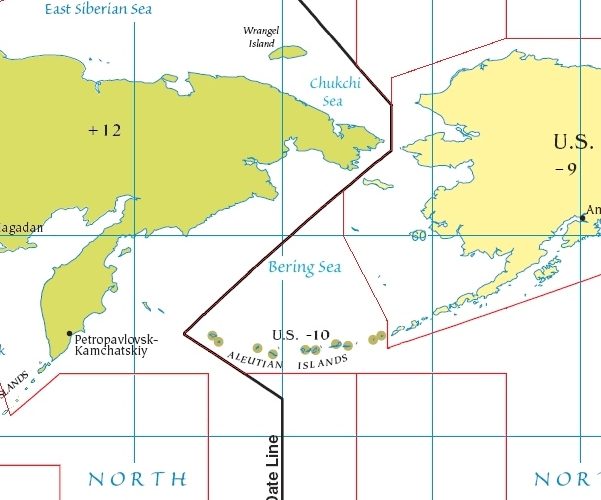
Throughout 1941, Jewish refugees arrived in Japan, among them students of the Mir Yeshiva. They had traveled through the Soviet Union, sailed from Vladivostok, and were welcomed by the Jewish community in Kobe. The question of when to observe Shabbos had already arisen. Some wanted to follow the Chazon Ish and observe Shabbos on what the Japanese called Sunday, while others held that they should follow the established local calendar. Some of the refugees refrained from performing Melacha on both Saturday and Sunday.
According to the civil calendar, Yom Kippur 5702 (1941) fell on Wednesday, October 1. The Chazon Ish held that October 1 was the ninth of Tishrei and that Yom Kippur fell on the following day. Observing Yom Kippur on both days was not feasible; the stringency would mean fasting two full days without food or water.
On the twentieth of Elul 5701, an urgent appeal was sent from Kobe to Yerushalayim on behalf of approximately 350 Jews. The surviving text reads: “Three hundred and fifty Jews are pleading, save us, answer immediately; on which day should we fast on Yom Kippur?” They needed a practical ruling. It was not enough to present them with a list of opinions and tell them to observe all of them out of caution.
The Chief Rabbi, R’ Yitzchak Isaac haLevi Herzog, convened an assembly of Rabbanim in Yerushalayim. The discussion examined the halachic sources, as well as the geographical and mathematical implications of the various calculations. The assembly also asked Professor Abraham Halevi Fraenkel to present the mathematical perspective. The assembly ruled that the refugees should observe the fast on Wednesday, in accordance with the calendar followed in Japan.
However, the ruling did not conclude with a decision on which day to fast. R’ Herzog added, “One must not fast on Thursday as well, because of the Sakana,” directing them to follow the guidelines in the Shulchan Aruch (O.C. 618:7–8). These sections discuss giving a Choleh food and drink in Shiurim (measured quantities less than the full Shiur that warrants Kareis), and increasing those quantities if necessary. This reference thus allowed the alternative opinion to be followed without instructing the people to undertake a second full day of fasting.
The Chazon Ish issued the opposite ruling: People should eat on Wednesday and fast on Thursday. In his view, this was not a case of evenly balanced doubt requiring two fasts. Wednesday was not Yom Kippur, whereas Thursday was the day on which fasting was obligatory. The instruction to eat on Wednesday was not merely a prelude to the fasting on Thursday; it was expressed the ruling itself: Wednesday was the ninth, and not the tenth, of Tishrei.
Thus, the same group of questioners received two different rulings. The Rabbanim in Yerushalayim instructed them to fast fully on Wednesday, while limiting themselves to Shiurim on Thursday so they would not endanger their health, in deference to the alternative opinion. The Chazon Ish instructed them to eat on Wednesday and fast on Thursday. The dispute remained unresolved, but neither ruling required them to fast fully on both consecutive days.
Historical accuracy also requires a qualification. During this period, many refugees moved from Kobe to Shanghai, so we cannot assume that all 350 people who submitted the question remained in Japan for Yom Kippur and followed one ruling or the other. Records of what individuals actually did are inconsistent. For our purposes, it is enough to examine the rulings that were issued. They reveal how the Poskim addressed the question, regardless of how the individuals who sought their guidance acted on it.
How Did the Concern for Sakana Affect the Ruling?
At first glance, this might seem like a straightforward case of Safek d’Oraisa, a doubt about a Torah prohibition. Eating and drinking on Yom Kippur violates a serious Torah prohibition that carries the punishment of Kareis. If we do not know which of two days is Yom Kippur, the general rule of Safek d’Oraisa l’Chumra should require everyone to fast on both days. Yet here that Chumra is problematic, because a prolonged fast could endanger lives.
There were two distinct uncertainties here. The first was a halachic question: On which day did the obligation to fast apply? The second concerned the practical consequences: What effect would a prolonged fast have on those seeking guidance? Invoking the principle of Safek d’Oraisa l’Chumra is not sufficient without considering the Chumra’s effect. The concern for Sakana itself is a halachically binding consideration.
At the same time, the Sakana does not establish where the dateline lies. We cannot conclude whether the Rabbanim of Yerushalayim or the Chazon Ish was correct based on the Psak not to fast on both Wednesday and Thursday. The Psak establishes something else: Two conflicting opinions cannot be combined to require a full fast on both days if doing so could endanger lives. The date question must still be resolved.
This highlights the difference between the two approaches to the ruling. The Chazon Ish held that Yom Kippur fell on Thursday, so he instructed them to eat on Wednesday. The Rabbanim in Yerushalayim ruled that they should follow the locally observed date, while leaving open the possibility that the alternative opinion regarding Thursday was correct. Their concern for the dissenting view did not lead to an additional fast, but to following the halachic rules governing food consumption by a sick person on Yom Kippur.
The instruction to restrict intake to Shiurim should not be understood as a solution to every dangerous situation. The very sections of the Shulchan Aruch that R’ Herzog cited make clear that if the small quantities are insufficient to prevent serious threats to a person’s health, or if there is uncertainty about their sufficiency, the person must be given the necessary amount. The Shiurim are not the objective. The objective is to give the person what he needs, and the Shiurim are a means of minimizing the violation of the prohibition on eating, but only if they meet his physical needs. If they do not adequately address the Sakana, one must not limit his intake to Shiurim.
The last point is particularly important when issuing a ruling to a community. The material available does not contain a detailed medical assessment of each refugee, nor do we need to invent one to understand the ruling. R’ Herzog explicitly referred to the danger posed by an additional fast. We should not conclude from this that two consecutive days of fasting are equally dangerous for everyone. Rather, we should recognize that R’ Herzog did not let a halachic concern become a communal directive that could endanger the very people it was meant to guide.
We must also distinguish between an individual who wishes to adopt a stringency and a ruling intended to govern an entire community. An individual may believe that he has the strength and reserves to tolerate a prolonged fast, but a general ruling also applies to those who are less robust, those who have endured hardship, and those who cannot accurately assess their own condition. When establishing a community practice, one must also determine whether it can be followed safely. The intention to be stringent does not, in itself, answer that question.
Reaching a Decision Amid Disagreement
The controversy over Japan teaches us that stringency does not always accomodate every opinion. On Shabbos, it was possible to refrain from performing Melacha on Saturday and Sunday. Regarding fasting, however, trying to satisfy every opinion created a new danger. A decision was now necessary: Which day was primary? What status should be given to the alternative opinion? And how could that opinion be taken into account?
This is also an important lesson for the intersection of medicine and Halacha. In some situations, an action may address a halachic concern while simultaneously increasing medical risk. We cannot consider each concern in isolation and simply combine all the stringencies at the end. We must determine the obligation, the extent of the uncertainty, and what preserving life requires in the circumstances at hand.
For the Chazon Ish, the analysis concluded that Yom Kippur fell on Thursday. For the Rabbanim in Yerushalayim, the analysis led to the Psak that they should fast on Wednesday and, to the extent their health allowed, eat only Shiurim on Thursday to account for the alternative opinion. The difference between their rulings is fundamental and should not be obscured. But both offered practical guidance people could follow: they set out when to fast and how to avoid being drawn into an additional fast that could be dangerous.

 Rabbi Yosef Sprung