 Rabbi Yosef Sprung
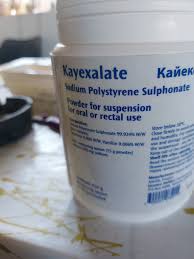
Many medical procedures involve actions that fall under the Melacha of “Lash” (kneading). In modern medicine, these are part of routine practice. Preparing antibiotic suspensions from powders, mixing or reconstituting intravenous medications, compounding ointments, and creating orthopedic casts or dental cement all involve different forms of combining or blending substances.
While some of these activities would be considered matters of Pikuach Nefesh, others are not and therefore must be carried out in ways that are permitted on Shabbos. To clarify the principles, this essay will provide a brief overview of the Halachos regarding Meleches Lash.
The Mishna in Shabbos (73a) lists Lash as one of the 39 Melachos. The Gemara (ibid. 49b) explains that the 39 Melachos are derived from the types of work performed in the construction of the Mishkan. Tosfos (ibid., s.v. “Arba’im”) note that although more than 39 types of work were actually performed, there was a received tradition that the prohibited categories of Shabbos are limited to 39. (See Tosfos ibid., s.v. “K’neged,” for further discussion.)
Rashi explains that the Melacha of Lash was performed in the Mishkan during the mixing of substances used to produce dyes, such as Techeiles, and in the processing of ram skins.
The Gemara in Zevachim (94a) discusses whether “Kibus” (washing) applies to leather garments, and quotes a B’raisa stating: “One who throws flax into water is liable,” due to Meleches Lash. The Gemara explains that when flax is soaked, it releases a natural residue that causes the fibers to bind together as a single mass.
From this discussion, it emerges that the essence of Lash is the binding of separate components into one unified mass by means of a liquid. In fact, it can be described as the opposite of Tochen: Instead of breaking something down into smaller parts, it brings separate parts together into a cohesive whole.
This explanation of Lash would clearly include any processes in which powdered substances undergo a fundamental transformation upon the addition of a liquid. For example, in preparing a cast, dry plaster powder hardens into a solid structure once moistened. Similarly, in dental and orthopedic cements, mixing creates a new material with properties entirely different from those of the original components. In such cases, one can clearly see the transition from loose particles to a unified substance – the core feature of Lash.
The Gemara in Shabbos (140a) rules that mustard that was kneaded before Shabbos may not be mixed by hand on Shabbos due to Meleches Lash. It is only permitted if done with a Shinui using a Kli. The Yerushalmi (Shabbos 7:2) lists the stages involved in preparing a garlic-based dish. In the course of the discussion, the Yerushalmi implies that Lash begins at the moment water is added to the mixture.
The Mishna (Shabbos 17b) records a Machlokes between Beis Shammai and Beis Hillel regarding whether one may soak ink ingredients for dyeing or legumes (such as vetch for animal feed) on Erev Shabbos. Beis Shammai permit it only if the soaking will be completed before Shabbos begins, while Beis Hillel allow it even if the process continues into Shabbos. The Gemara (ibid. 18a) further records a Machlokes Tana’im as to whether Lash applies exclusively when a solid is actively mixed with a liquid (R’ Yosi), or even when it is merely soaked (Rebbi).
A related discussion appears in the Mishna in Shabbos 155b regarding feeding animals on Shabbos. One may pour water onto bran (animal feed) but may not knead the mixture by hand. The Gemara explains that this ruling follows R’ Yosi, who maintains that merely soaking the mixture is not considered Lash.
This distinction is practically relevant to modern medicine, particularly for powdered medications that require reconstitution. In some cases, simply adding the liquid creates an active suspension even without significant mixing, while in others, shaking or stirring is necessary to achieve uniformity. Accordingly, the difference between mere soaking and active mixing becomes highly significant (although, as will be discussed below, the Halacha also depends on the mixture’s consistency).
Shinui
The Gemara (156a) indicates that, according to R’ Yosi, kneading a substance that is not typically kneaded (such as bran) may be permitted if done with a Shinui. Rashi explains this as performing the action k’l’Achar Yad, while Rabbenu Chananel interprets it in line with the Gemara’s wording: mixing in small amounts. Additional forms of Shinui mentioned in the Gemara include mixing in a crisscross manner or shaking the vessel instead of mixing by hand.
Belila Raka – A loose mixture
The Gemara (ibid.) asserts that, according to all opinions, it is permitted to mix a Shesisa (a food made from flour and water) because it is a loose, pourable mixture, and the prohibition of Lash does not apply. However, this is only permitted if the mixing is done with a Shinui, meaning a deviation from the usual weekday method. For instance, if the standard procedure is to add the powder before the water, on Shabbos it is advisable to reverse the sequence.
The Rishonim disagree in their identification of two foods mentioned by the Gemara: “Kali” and “Shesisa”. According to Rashi, they refer to the same basic substance, with the difference being in how it is prepared, resulting in either a thick or a loose mixture. The Rambam (Hilchos Shabbos 21:33) distinguishes between “roasted flour” (Kemach Kali) and “grain that has not reached one-third growth” (Shesisa). The Magid Mishna explains that the Rambam disagrees with Rashi and understands these as two fundamentally different types of materials.
In a medical context, a clear parallel can be found in liquid suspensions, such as medications or nutritional solutions, where the substance does not form a stable mass but remains a thin, pourable mixture. In such cases, the similarity to a loose mixture (Belila Raka) may provide grounds for leniency, provided that the preparation is done with a Shinui.
In practical terms, however, employing a Shinui can be difficult. For instance, reversing the order (adding water first, then the powder) is often impractical when the powder is already prepackaged in a designated bottle. (Ideally, an additional Shinui should also be made, such as mixing with a spoon in an unusual manner.) Because of these complications, it is preferable to prepare these suspensions before Shabbos whenever possible – particularly in the case of a mixture that does not fully dissolve and whose efficacy is not affected by preparation in advance.
The Gemara (18a) indicates that there is a distinction between substances that are considered kneadable (Bar Gibul), such as flour, and those that are not(Lav Bar Gibul), such as ash. The Rishonim further develop this distinction:
“Bar Gibul”
These are materials that can be fully combined into a dough-like mass, in which the individual particles lose their distinct identities and merge into a single mass. Once this transformation occurs, it cannot truly be reversed – meaning that even if the mixture is later dried and crumbled, it is considered a fundamentally new substance. This is what the Poskim refer to as Bar Gibul.
Examples include flour and semolina, soil and clay, fine sand, cement and plaster, and most food and medicinal powders.
Forming such a mixture is Asur Min haTorah according to all views. However, the Gemara (156a) records a Machlokes between Rebbi and R’ Yosi bar R’ Yehuda as to whether the Issur begins as soon as water is added, or only at the stage of active mixing. Most Poskim rule that the initial stage is only an Issur d’Rabbanan.
“Lav Bar Gibul”
These are materials that can only be partially combined. Their particles do not fully lose their identity but merely stick together when mixed with liquid. If the mixture is later dried and broken apart, the particles revert to their original state, as if they had never been fully combined.
These materials include: bran and roasted flour (flour that has been toasted and no longer dissolves or fully integrates when mixed with liquid); matza meal; ash and coarse sand; and certain other foods and medicinal powders.
On this issue, the Rishonim take sharply opposing positions:
According to the Rambam, kneading such substances is only Asur mid’Rabbanan. Therefore, it may be permitted when done gradually (little by little) or with a Shinui. Simply adding water or another liquid without directly mixing is not prohibited at all.
However, according to the Ra’avad, just adding the water to the mixture is Asur Min haTorah. In his view, even R’ Yosi would agree here: Since the substance is not truly kneadable, the act of adding liquid is defined as “kneading.”
A third approach, found in the Sefer haTeruma and the Mordechai, is that just as Rebbi and R’ Yosi disagree regarding kneadable substances, they also disagree regarding non-kneadable ones (with R’ Yosi ruling permissively regarding adding liquid without mixing). This position is also brought in the Shulchan Aruch (ibid.) as a second opinion, and can be relied upon in pressing situations when no alternative is available.
Mixing without forming a cohesive mass:
There are cases in which two ingredients are combined, yet no real binding occurs because of the ingredients’ nature. Examples include: adding oil to a vegetable salad; mixing crumbs into either a thick or loose batter where no new cohesion takes place; combining large pieces that, due to their size, do not stick together; or even mixing two dry substances – even if they are fine like flour – when they blend without forming a mass. In all such cases, there is no prohibition of Lash whatsoever – neither Min haTorah nor mid’Rabbanan
Types of mixtures:
- Thick mixture (Blila Ava) – a dense, stable mixture that can hold its form even without a container. Preparing such a mixture is Asur Min haTorah.
- Loose mixture (Blila Raka) – a mixture that has some cohesion but remains very fluid and pourable. Its preparation is Asur mid’Rabbanan, but it may be permitted if done with a Shinui.
- No real cohesion – a mixture that does not form any clumps at all but remains like a cloudy liquid. In such cases, there is no prohibition of kneading at all.
In the medical context, substances that harden after mixing – such as plaster or surgical epoxies – are comparable to a Blila Ava. Semi-thick suspensions resemble a Blila Raka, while clear solutions correspond to mixtures where no cohesion takes place at all.
Conclusion
The Shulchan Aruch (O.C. 321:14–16) presents the Rambam’s view that mixing substances that are Lav Bar Gibul is only Asur mid’Rabbanan (and that it is permissible to add liquid without mixing, as is mixing gradually or with a Shinui is permissible) as the primary ruling. He also cites the position of the Sefer haTeruma – that this is subject to the Machlokes between Rebbi and R’ Yosi – as an alternative opinion (“Yesh Omrim”). However, the wording of the Rema implies that he takes the stricter position of the Ra’avad, and adding liquid to a substance that is Lav Bar Gibul is Asur mid’Oraisa. This is also the approach adopted by later authorities such as the Chayei Adam (19:61), the Mishna Berura (324:11), and the Ben Ish Chai (Parshas Mishpatim, 18).
Nevertheless, if the kneading was performed on Shabbos, the Biur Halacha permits the mixture Bedi’eved, since many authorities follow the more lenient opinion of R’ Yosi.


 Rabbi Yosef Sprung