 Rabbi Yosef Sprung
In last week’s essay, we discussed the following question:
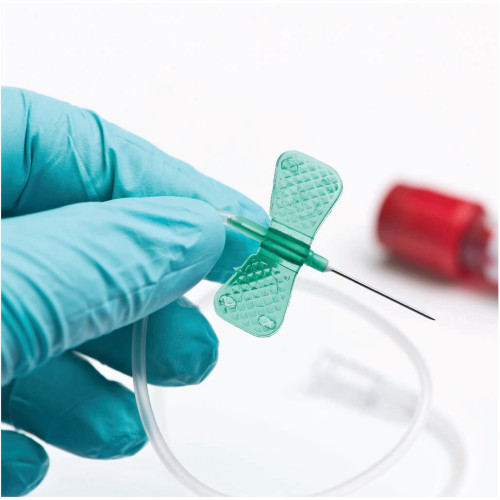
Drawing blood for laboratory tests is one of the most common medical procedures. Usually, after the minimum required amount has been collected, blood often keeps flowing into the vial for a few extra moments – whether for convenience, to guarantee enough blood for analysis, or simply because an extra drop or two doesn’t usually matter. However, from a halachic standpoint, this raises an important question. Once the necessary quantity has been obtained, does the superfluous blood drawn constitute unnecessary injury prohibited by the Torah? Or perhaps it is permissible since the patient consented to the procedure and is entirely unconcerned with the additional blood.
We further analyzed a Machlokes Acharonim regarding whether a person’s permission over their own body is enough to allow physical harm, citing the Chavos Yair (163), Shulchan Aruch haRav (Hilchos Nizkei Guf v’Nefesh 4), and Chazon Ish (C.M. 19:5), who rule that a person’s consent does not remove the prohibition. They reason that a person is not considered the true owner of his body; rather, it is entrusted to him for safeguarding. However, the Maharlbach (Kuntres haSemicha 1), the Minchas Chinuch, Parshas Mishpatim, Mitzva 48:2), and others, hold that consent is effective.
We also discussed the principle that Chavala (injury) for medical purposes is permissible. Moreover, even when the Chavala incurred is beyond that which is strictly necessary, the Issur may only be d’Rabbanan. Additionally, we proposed that a distinction might be made between the traditional cases analyzed by the Poskim – such as situations where the medical procedure, like removing a splinter, did not require bloodletting – and cases where the medical treatment naturally involves drawing blood.
In the latter case, if slightly more blood is drawn than required, it may not constitute Chavala at all, since it can reasonably be viewed as part of the medical procedure. In fact, the patient would certainly not object to a few additional drops of blood being drawn and would presumably explicitly consent if asked. Furthermore, it is often advantageous to collect slightly more than the minimum requirement to prevent repeat testing due to insufficient sample volume or to allow additional tests if necessary.
We could draw the following distinction: When the additional amount is medically negligible and universally accepted as part of standard practice – such that any reasonable person would implicitly agree to it – there is a strong basis to argue that it does not constitute “unnecessary injury” at all, even according to Poskim who maintain that personal consent cannot permit bodily injury. This is how the procedure itself is defined.
The same is true of surgery. When a patient consents to an operation, we do not measure every additional millimeter of the incision and ask whether the patient explicitly waived objection to it, because the entire process is understood as a single, unified medical act within the accepted framework of treatment.
However, if blood is drawn beyond what is medically accepted, or in quantities lacking any reasonable justification, it becomes difficult to permit this merely because “the patient does not object.” After all, the medical dispensation exists for the sake of treatment, not as a blanket license to inflict bodily harm. This is especially true, according to opinions that hold that a person’s consent is entirely ineffective to permit injury to his body.
We should also note that even where there is no Issur Torah involved, medical professionals bear both an ethical and a Halachic obligation to minimize harm to the patient as much as possible. This principle is deeply rooted throughout Halacha. The permission granted to a physician to injure in the course of treatment is not a right of ownership over the human body, but a narrowly limited authorization solely for healing. Consequently, both the spirit of Halacha and professional ethics demand that medical intervention always be as precise and limited as possible.
With that background, we may now turn to the rulings of the Poskim on this matter:
The Mishne Halachos[1] (17:172) adopts a notably stringent approach. He rules that one must be exceedingly careful not to draw even a single unnecessary drop of blood. He even expresses surprise at the questioner’s suggestion that such a standard would place physicians under enormous pressure and would be impossible to uphold in practice. He responds that, on the contrary, this is precisely the level of care that ought to be demanded.
The Tzitz Eliezer[2] (14:35) addresses this issue at length in a remarkable Teshuva concerning the practice of allowing trainees to perform intravenous injections that can cause bruising and injury. He discusses whether the patient’s consent is effective, and whether such procedures may even be performed on Shabbos.
He begins with a description of a personal experience:
I have observed that it is done quite routinely in hospitals; trainees are allowed to place needles into veins, both to draw blood and to administer medications. And my eyes have seen, and in my own body I have felt, how in performing these injections the trainees – because they are not yet fully skilled and proficient – cause injury to the limbs into which they inject. The area swells and becomes discolored, and the entire limb begins to ache to the point that it becomes necessary to apply a medicated bandage to the swollen and painful area. This lasts for several days or more until it heals.
And so, the question arises: how is it permissible to entrust the performance of these injections to trainees? After all, it is forbidden to inflict injury upon another person. Although this does not reach a level of actual danger, it nevertheless constitutes a violation of the prohibition against causing harm to the body.
Do not answer that this is considered “Chovel l’Tzorech Refua (injury for the sake of healing)”, for this is not the case. The medical treatment itself does not require these injuries, and as I have seen, when a trained individual performs the procedure, these injuries do not occur. Therefore, it should not be permissible to allow a trainee to administer these injections except in a situation where no trained person (i.e., someone who knows how to perform the procedure without causing injury) is available at that moment, and the procedure must be carried out immediately.
What is even more serious is that they do not even ask the patient’s permission in this matter – to inform him and request his consent to allow a trainee to perform the procedure and waive any [claims of] injury that may result. Instead, the trainee approaches the patient’s bed with the syringe and, without a word or explanation, performs the procedure, causing bruising and pain.
Even if the patient were to grant permission, this would still be ineffective…
He concludes:
Therefore, it is clear that there is no permission to cause injury to a person’s body so that a trainee may learn this skill. The only exception is when there is no one more qualified available, and immediate injection is medically necessary as described above. In such a case, it may be permitted, and one may regard everything the trainee does in performing the medical task as being for the sake of Refua, since at that moment there is no more expert person on site to perform it. This also applies if the more expert physician is occupied at that time with more urgent cases; then it is considered as if no expert is present…
… I will not refrain from adding that there may be room to permit it when it is very questionable whether the trainee will actually cause injury, as it is very possible that he will not. In that case, it may be regarded as Davar she’Eino Mischaven, rather than a Psik Resha. However, even in that situation, obtaining the patient’s permission is undoubtedly required.
The Nishmas Avraham (C.M. 420) cites a critical observation from R’ Shlomo Zalman Auerbach zt”l:
In places where non-Jewish physicians are not common, if Jews do not gain practical training, from where will physicians come? Therefore, if the patient does not explicitly demand [that he] only [wants to be treated by] a specialist, we assume that he is generally not particular about it, and it is permitted even by a trainee.
In another letter, R’ Shlomo Zalman adds:
Since this is the accepted practice across all hospitals, patients enter with this understanding from the outset, and no explicit permission is required.
Presumably, R’ Shlomo Zalman’s intention is that patients implicitly consent to additional blood draws or minor injuries caused during training; these can also be seen as part of the medical process. After all, without allowing trainees to gain experience, there will eventually be no future doctors.
Two important observations.
First, supervising physicians should place particular emphasis on preventing and minimizing unnecessary blood loss, especially during the early stages of training. While such excess blood loss is generally insignificant, a physician committed to Halacha should be vigilant.
Second, drawing excessive blood may transgress Issurim d’Oraisa on Shabbos. Clearly, patient consent is irrelevant to questions of Melacha.
[1] R’ Menashe Klein zt”l, Ungvarer Rav (1924-2011)
[2] R’ Eliezer Yehuda Waldenberg zt”l (1915-2006)


 Rabbi Yosef Sprung